

7 Steps for Towing Help After a Car Breakdown
A warning light, a sudden loss of power, or a tire that will not hold air can turn an ordinary drive into a stressful stop on the shoulder. Towing help after a car breakdown is about more than getting a vehicle from point A to point B. The decisions you make in the first few minutes can protect you, prevent further damage, and make the repair process much easier once your car reaches the shop.
1. Get yourself out of danger first
If the vehicle is still moving, stay calm and guide it toward the safest available location. A parking lot, side street, or wide shoulder is preferable to stopping in a travel lane. Turn on your hazard lights as soon as you recognize a problem, especially if your vehicle is slowing unexpectedly.
On a busy road, do not stand between your vehicle and traffic. If you can exit safely, move to a location away from passing cars, ideally behind a guardrail or well off the roadway. If leaving the vehicle would put you in greater danger, stay inside with your seat belt fastened and call for help.
A breakdown involving smoke, flames, the smell of fuel, or a collision requires a different response. Move away from the vehicle if it is safe to do so and call 911. Do not open the hood of a smoking vehicle or attempt a roadside repair near traffic. A tow can wait a few minutes. Personal safety cannot.
2. Identify the problem without guessing
You do not need to diagnose the vehicle yourself, but a few details will help the towing provider and repair shop prepare. Note any dashboard warning lights, unusual sounds, leaks, smoke, vibrations, or changes in steering and braking. If the car overheated, do not keep restarting it to see whether the warning goes away. Continuing to drive an overheating engine can cause significant damage.
Take a few photos if conditions are safe. Photograph warning messages, the area under the vehicle if there is a visible leak, and any tire or collision damage. This record can be useful when discussing repairs or an extended-warranty claim.
Avoid adding fluids, disconnecting battery cables, or forcing the vehicle to move unless you know exactly what you are dealing with. A simple dead battery may be resolved with a jump-start, but a no-start condition can also be caused by a charging issue, fuel problem, security-system fault, or mechanical failure. When in doubt, towing is the safer choice.
3. Request the right type of towing help after a car breakdown
When you call for a tow, give the dispatcher your precise location, vehicle year, make, model, color, and license plate number. Let them know whether the car is in a garage, on a narrow street, in a parking lot, or on the shoulder of a highway. Access conditions affect the equipment and time needed to recover the vehicle safely.
Also explain whether the vehicle can roll, steer, and shift into neutral. A car with locked wheels, a damaged suspension, or a transmission problem may need special handling. If you drive an all-wheel-drive, four-wheel-drive, electric, hybrid, lowered, or luxury vehicle, say so before the truck is dispatched.
For many modern vehicles, a flatbed is the safest option because all four wheels ride off the ground. It is particularly useful for all-wheel-drive vehicles, vehicles with drivetrain damage, and cars that cannot be placed in neutral. A wheel-lift tow may be suitable in some situations, but it depends on the vehicle and the reason it is disabled. The right method protects the drivetrain, bumper, wheels, and underbody from unnecessary damage.
4. Confirm where the vehicle is going
Before the tow truck arrives, decide whether the vehicle should go to your home, a dealer, or an independent repair shop. Towing it home may make sense if you need time to arrange repairs, but it can add a second tow and delay the diagnosis. Sending it directly to a qualified shop is often the faster, less complicated option.
Choose a destination that can inspect the issue, not merely store the vehicle. A repair facility with diagnostic capability can assess warning lights, starting problems, engine concerns, transmission issues, tire damage, and electrical faults after the vehicle arrives. This helps prevent your car from being moved repeatedly between a tow yard, a tire shop, and a repair shop.
For drivers in Glen Burnie and Anne Arundel County, choosing a nearby full-service shop can be especially helpful when a breakdown interrupts work, school pickup, or a family schedule. One location that can coordinate the tow, inspect the problem, communicate repair options, and complete the work reduces the number of calls you have to manage.
5. Protect your vehicle and your information during the tow
Remove valuables, work equipment, garage remotes, personal documents, and anything you will need before the vehicle leaves. Keep your registration and insurance information accessible, but do not leave extra personal records in the glove box. If the vehicle will be at a shop after hours, leave only the keys and information the facility requests.
Ask the tow operator for the company name, the destination, and the expected drop-off process. A professional operator should be able to explain how your vehicle will be secured and where it will be left. Before it is loaded, take a few photos of the vehicle's exterior, including wheels, bumpers, and any existing damage.
If you use roadside assistance through your insurer, vehicle manufacturer, credit card, or extended warranty, confirm what is covered before authorizing service when possible. Coverage limits can vary by distance, towing method, and service provider. If immediate safety is involved, get to a safe location first and sort out reimbursement details afterward.
6. Make the repair handoff clear
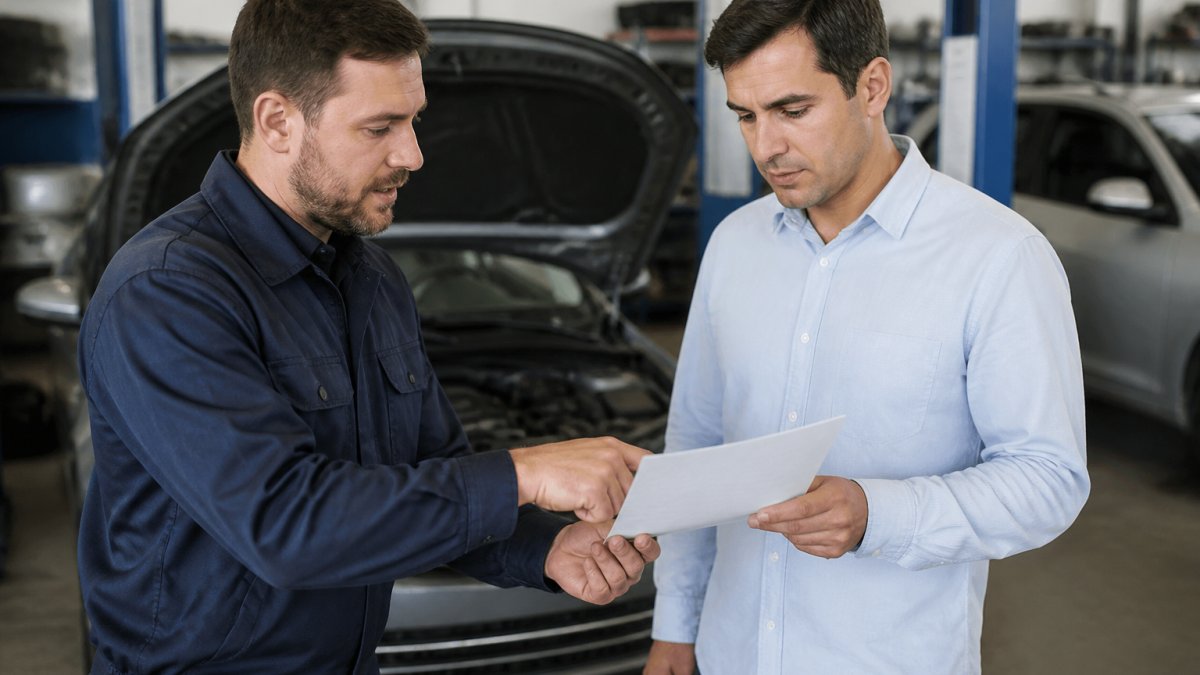
A good repair decision starts with accurate information. Tell the shop what happened immediately before the breakdown: whether the car stalled at a stoplight, lost power while accelerating, overheated in traffic, made a grinding sound, or would not restart after a short stop. Mention recent repairs, warning lights that appeared earlier, and any work performed by another facility.
Be specific about your priorities as well. Some drivers need the vehicle back for a commute the next morning. Others want a complete inspection before approving any work. If you have an extended warranty, say so at the start. The repair shop may need to inspect the vehicle, document the failure, and communicate directly with the warranty company before covered repairs are authorized.
Do not approve a major repair based solely on a roadside opinion. Tow operators are valuable for safely moving a disabled vehicle, but the actual cause of a breakdown often requires testing. A check-engine light can point to a minor sensor concern, a fuel-delivery issue, an ignition fault, or a more serious engine problem. Proper diagnostics prevent expensive guesswork.
7. Avoid the mistakes that create extra expense
The most costly breakdown decisions are often made under pressure. Continuing to drive with an oil-pressure warning, overheating warning, severe vibration, brake concern, or flashing check-engine light can turn a repairable issue into major damage. Trying to save the price of a tow is rarely worth risking an engine, transmission, or safety system.
It is also wise to avoid authorizing repairs without a clear explanation of the diagnosis, recommended work, and expected cost. Ask what failed, why the repair is needed now, and whether there are related maintenance items that should be addressed while the vehicle is already in the shop. A trustworthy repair provider should give you straightforward answers and let you understand the trade-offs.
After the repair, ask what warning signs should prompt a return visit and whether any follow-up service is recommended. For example, a failed battery may point to a charging-system issue, while uneven tire damage may justify an alignment or suspension inspection. Addressing the underlying cause can keep a one-time roadside problem from becoming a repeat event.
A breakdown is disruptive enough without having to coordinate every detail alone. Cruiser Auto Repair can help manage towing coordination, diagnostics, repairs, and extended-warranty communication so you can focus on getting your routine back on track. Keep a reliable repair shop's number saved before you need it - that small bit of preparation can make the next unexpected stop far less stressful.


Comments