
Car Transmission Repair Cost: What to Expect
- Jesse Clay
- 6 days ago
- 8 min read
Table of Contents
Average Transmission Repair Cost Ranges
Signs of Transmission Failure to Watch For
Factors That Affect Your Transmission Repair Costs Vehicle Make and Model Transmission Type: Automatic, Manual, and CVT Labor Rates and Diagnostic Fees
Vehicle Make and Model
Transmission Type: Automatic, Manual, and CVT
Labor Rates and Diagnostic Fees
Transmission Repair vs. Replacement: When to Choose Each
Used vs. Remanufactured Transmissions: Cost and Reliability
How Long Does a Transmission Repair Take?
DIY vs. Professional Transmission Repair
Extended Warranty Coverage and Transmission Repairs
Last Updated: August 15, 2026
Average Transmission Repair Cost Ranges
Transmission repair costs vary dramatically based on the problem. A simple fluid flush might cost a few hundred dollars, while a complete transmission replacement can exceed several thousand. Most vehicle owners face repairs somewhere in the middle, requiring professional diagnosis before any price becomes clear.
Costs fluctuate because transmission problems range from single failing components, like a solenoid or torque converter, to complete transmission rebuilds or replacements. A transmission fluid flush and filter replacement is the least expensive intervention. Internal component repairs, valve body work, or clutch replacement cost more. Complete transmission replacement represents the highest expense.
At Cruiser Auto Repair, we start every transmission issue with a transparent diagnostic fee and clear explanation of findings. Once you know what's wrong, you can make an informed decision about repair versus replacement, which often makes the biggest difference in your final bill. The diagnostic fee typically covers labor in identifying the problem. Some shops credit this toward repairs if you proceed; others charge it separately. Either way, this upfront investment prevents quotes for repairs you don't actually need.
Signs of Transmission Failure to Watch For
Recognizing early signs of transmission failure can save thousands of dollars. Transmission issues almost always worsen over time, and catching them early often means choosing a simple repair over complete replacement.
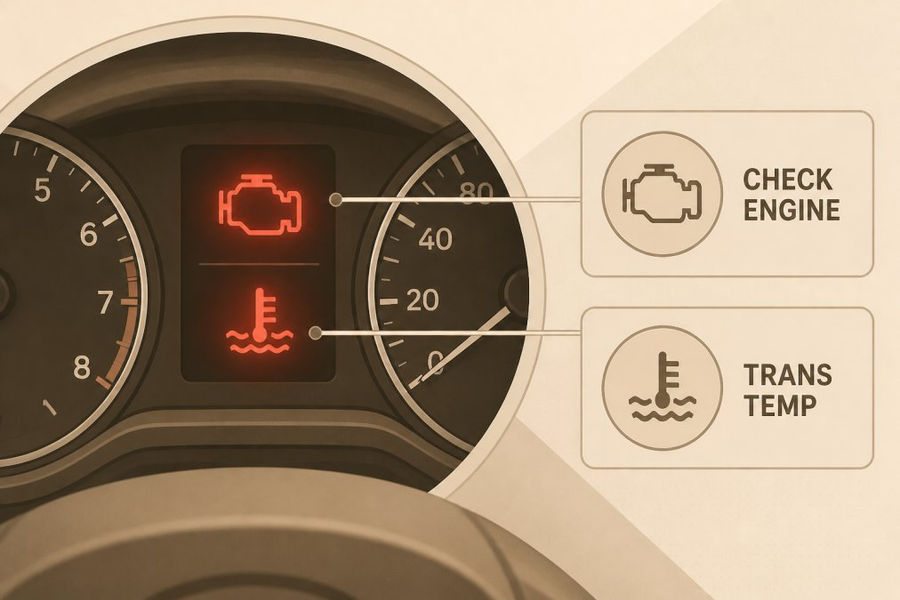
A warning light on your dashboard is the most obvious indicator. A check engine light paired with transmission-related fault codes means your vehicle's computer detected a problem. Professional diagnosis is necessary.
Shifting problems represent another critical warning sign. Hesitation when shifting gears, rough shifts, or gear slippage indicate transmission struggle. Gear slippage feels like engine revs without smooth acceleration. Manual transmissions might have difficulty engaging gears or require excessive clutch force. Automatic transmissions might fail to shift smoothly or hold gears properly.
Fluid leaks under your vehicle signal transmission trouble. Transmission fluid is bright or dark red, distinctive from engine oil. A regular puddle means your transmission is losing fluid, causing overheating and accelerated internal wear. Burning smells often accompany leaks, indicating overheating.
Unusual noises from beneath your vehicle warrant immediate attention. Grinding, whining, or clunking sounds when shifting suggest internal transmission problems.
Factors That Affect Your Transmission Repair Costs
Several variables determine your actual transmission repair costs.
Vehicle Make and Model
Your specific vehicle makes an enormous difference. Some transmissions are straightforward to access and repair; others require engine removal or extensive disassembly. Labor-intensive access increases labor rates and total bills.
Luxury vehicles and imports often cost more than domestic vehicles. Parts availability matters too. Common transmissions shared across multiple models have readily available, competitively priced parts. Rare or specialized transmissions mean sourcing harder-to-find parts, increasing costs. A 2024 luxury sedan's transmission repair will likely cost more than a 2015 domestic sedan's repair.
Transmission Type: Automatic, Manual, and CVT
Automatic transmissions contain more complex internal components and hydraulic systems than manual transmissions, making automatic repairs typically more expensive.
Manual transmissions often need clutch replacement, which is labor-intensive but usually less expensive than automatic transmission internal repairs. If your manual transmission needs internal work beyond clutch replacement, costs rise significantly.
Continuously variable transmissions (CVT) use a belt and pulley system instead of traditional gears. CVT repairs can be expensive because fewer shops have expertise, and replacement parts are costly. A remanufactured CVT might be more economical than a new unit.
Labor Rates and Diagnostic Fees
Your location and chosen shop affect labor rates substantially. Urban shops typically charge more than rural shops. Dealerships charge more than independent repair facilities. Specialty transmission shops often fall in between.
A diagnostic fee covers the technician's time to identify the problem using specialized equipment. Once you know what's wrong, you can decide whether repair or replacement makes sense. Some shops waive the diagnostic fee if you proceed with repairs; others charge it separately.
Labor time varies by repair complexity. A transmission fluid flush takes 1-2 hours. Rebuilding internal components takes 8-15 hours. Transmission replacement takes 10-20 hours depending on vehicle design. Multiply these hours by your shop's labor rate to understand why labor costs dominate transmission repair bills.
Transmission Repair vs. Replacement: When to Choose Each
The decision between repairing and replacing your transmission often determines whether you spend $1,500 or $5,000.
A repair makes sense when the problem is isolated to a specific component. Replacing a transmission solenoid costs far less than replacing the entire transmission. Fixing a leaking transmission cooler is straightforward. A transmission fluid flush and filter replacement addresses early shifting issues economically.
Replacement becomes necessary when internal transmission damage is extensive. Once internal components like the valve body or gear sets are severely worn or damaged, rebuilding often costs nearly as much as replacing. You're then choosing between a rebuilt, remanufactured, or new transmission.
A rebuilt transmission has been disassembled, inspected, and reassembled with new or reconditioned parts. A remanufactured transmission is factory-rebuilt to OEM specifications, usually with warranty. This middle-ground option offers more reliability assurance than a basic rebuild but costs more.
Your vehicle's age and overall condition should influence this decision. If your vehicle is otherwise reliable and you plan to keep it several more years, transmission replacement might justify the cost. If your vehicle has multiple aging systems, major repairs may no longer make financial sense.
Used vs. Remanufactured Transmissions: Cost and Reliability
When replacement becomes necessary, you face three options: used, rebuilt, or remanufactured.
A used transmission from a salvage yard costs the least upfront but offers no guarantee of condition or remaining life. A used transmission might fail within months or last for years, making it a gamble.
A rebuilt transmission has been disassembled, inspected, and reassembled with new or reconditioned parts by a local shop. Rebuild quality varies based on the shop's expertise and standards.
A remanufactured transmission is factory-rebuilt to OEM specifications, typically by the original equipment manufacturer or authorized rebuilder. These carry manufacturer warranties, often covering 3-5 years or specific mileage limits. Remanufactured transmissions cost more than used or basic rebuilds but offer the most reliability assurance.
Choose based on your budget, risk tolerance, and how long you plan to keep your vehicle. A used transmission makes sense only if you're comfortable with uncertainty. A remanufactured transmission makes sense if you want reliability and peace of mind.
How Long Does a Transmission Repair Take?
The timeline for transmission work varies dramatically based on what needs to be done.

A transmission fluid flush and filter replacement takes 1-2 hours. You can often pick your vehicle up the same day.
Diagnosing a transmission problem takes 1-2 hours using diagnostic equipment.
Repairing a specific component like a transmission solenoid or torque converter typically takes 4-8 hours and requires transmission removal and partial disassembly.
A transmission rebuild or overhaul takes 8-15 hours or longer. The transmission must be completely removed, disassembled, inspected, and reassembled.
A transmission replacement takes 10-20 hours depending on vehicle design. Some vehicles have accessible transmissions; others require engine removal.
Vehicle availability matters too. If your shop has multiple technicians, work might proceed quickly. Planning ahead and scheduling in advance often gets faster service than emergency repairs.
DIY vs. Professional Transmission Repair
Transmission work requires specialized knowledge, tools, and facilities that most DIY mechanics don't have. A transmission contains hundreds of precisely-machined internal components where assembly order, torque specifications, and seal orientation all matter. A single mistake during reassembly can cause catastrophic failure.
Transmission removal itself requires proper equipment. A transmission weighs 100-200 pounds and requires a lift, jack stands, and transmission jack. Improper removal risks damaging the transmission, engine, or yourself.
Diagnostic work is where some DIY mechanics can contribute. Reading diagnostic codes with a code reader can identify what the transmission computer detected. However, interpreting those codes requires expertise. Professional diagnosis with specialized transmission diagnostic equipment is necessary to identify the actual problem.
If you're mechanically inclined, you might handle transmission fluid changes yourself on many vehicles. However, some modern vehicles have sealed transmissions requiring special procedures or equipment. Check your vehicle's service manual before attempting this.
For any repair beyond fluid service, professional help is the right choice. The cost of professional repair is far less than the cost of a failed DIY repair.
Extended Warranty Coverage and Transmission Repairs
If your vehicle has an extended warranty, transmission coverage might be included. Understanding your warranty's terms prevents unpleasant surprises.
Some extended warranties cover transmission repairs and replacement; others exclude transmission work entirely. Your warranty documentation spells out what's covered.
Deductibles apply to most warranty claims. You might pay a set deductible per claim, or the warranty might cover a percentage of repair costs while you pay the rest.
Pre-existing conditions matter. If your transmission was already showing problems before your warranty began, the warranty company might deny coverage.
Cruiser Auto Repair handles extended warranty repairs directly with providers, managing the administrative process so you don't navigate warranty claims yourself. We communicate with your warranty company, handle documentation, and ensure your repairs are processed smoothly. This takes the stress out of warranty repairs and gets you back on the road faster.
Transmission problems don't resolve themselves, and delaying diagnosis only makes repairs more expensive. When your vehicle shows signs of transmission trouble, professional diagnosis is your first step toward understanding costs and options. Cruiser Auto Repair's professionally qualified technicians provide transparent diagnostic work and clear repair recommendations without pressure to authorize unnecessary work. We handle extended warranty claims directly with providers, eliminating the back-and-forth that makes transmission repairs stressful. Schedule your transmission diagnostic appointment and get clarity on what your vehicle actually needs.
Frequently Asked Questions
What's the typical cost range for transmission repair?
Transmission repair costs vary widely based on the issue and vehicle type. Minor repairs like fluid flushes or solenoid replacement may cost $300-$800, while more complex repairs involving internal components can reach $1,500-$3,000. Full transmission replacement typically runs $1,500-$5,000+ depending on whether you choose used, remanufactured, or new parts. Contact Cruiser Auto Repair for a free diagnostic and personalized estimate based on your specific vehicle and transmission problem.
How do I know if my transmission needs repair or replacement?
Signs of transmission failure include gear slippage, delayed shifting, grinding noises, and transmission fluid leaks. Minor issues caught early, like worn clutch components or valve body problems, often qualify for repair. However, if your transmission has severe internal damage, multiple failed parts, or high mileage (150,000+ miles), replacement may be more cost-effective long-term. A professional diagnostic will clarify whether repair or replacement makes sense for your situation.
What's the difference between used and remanufactured transmissions?
Used transmissions come directly from salvage vehicles and carry unknown wear history, making them a budget option with higher failure risk. Remanufactured transmissions are professionally rebuilt to factory specifications, with worn parts replaced and all internal components inspected. While remanufactured units cost more upfront, they typically include a warranty (often 2-3 years) and carry significantly lower failure risk. For most drivers, remanufactured transmissions offer the best balance of cost and reliability.
Can you handle my extended warranty transmission repair claim?
Yes. Cruiser Auto Repair directly manages extended warranty repairs, handling all communication and claim processing with warranty providers on your behalf. This eliminates the back-and-forth and paperwork burden you'd face going through a dealership. We'll verify your coverage, manage the claim, and ensure you're not stuck paying out of pocket for covered repairs. Our team's transparency and direct relationship with warranty companies makes the entire process seamless.
SCHEDULE YOUR APPOINTMENT
This article was written using GrandRanker


Comments