

Modern Car Diagnostics Guide for Smarter Repairs
A check-engine light can mean anything from a loose fuel cap to an engine misfire that can damage a catalytic converter. That is why a modern car diagnostics guide should start with one simple point: the warning light is a clue, not a repair instruction. The right diagnosis finds the cause of the problem before anyone starts replacing parts.
For drivers who depend on their vehicle for work, school runs, errands, or fleet operations, a good diagnostic process saves more than repair money. It can prevent a small issue from becoming a breakdown, reduce time without your vehicle, and give you a clear explanation of what needs attention now versus what can be monitored.
What Modern Car Diagnostics Actually Means
Modern vehicles are managed by a network of computers, sensors, modules, wiring, and mechanical systems. The engine control module watches inputs from components such as oxygen sensors, wheel-speed sensors, ignition coils, fuel injectors, temperature sensors, and throttle controls. When a reading falls outside its expected range, the system may store a diagnostic trouble code and turn on a warning light.
A scan tool reads those codes, but the code alone does not identify a failed part. For example, a code related to an oxygen sensor may be caused by the sensor itself, damaged wiring, an exhaust leak, a fuel-delivery problem, or an engine condition that is changing the exhaust reading. Installing a new sensor without testing can leave the original problem in place.
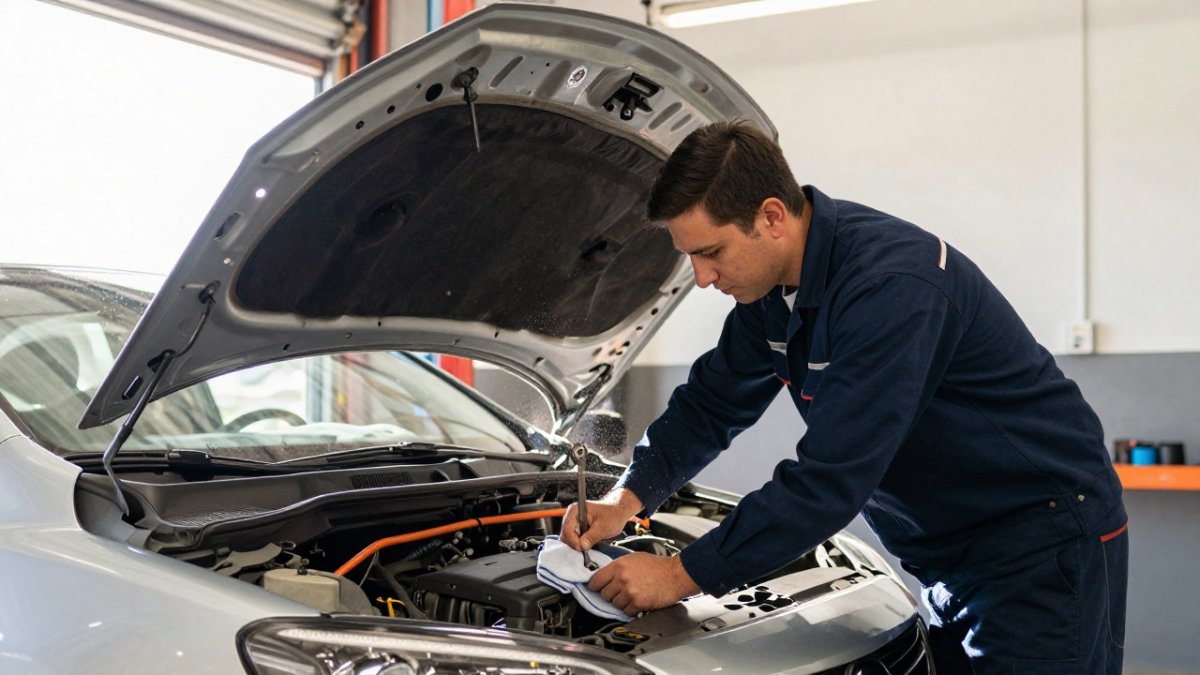
Professional diagnostics combines computer data with hands-on testing. A technician may review live sensor readings, check service history, inspect connectors and vacuum lines, test electrical circuits, measure fuel pressure, examine spark plugs, or road-test the vehicle. The exact process depends on the symptom, the vehicle, and the codes present.
Start With the Warning Light and the Way the Car Feels
Not every dashboard light requires the same response. A steady check-engine light generally means the vehicle has stored a fault that should be diagnosed soon. You may still be able to drive it carefully, but waiting too long can affect fuel economy, emissions, and reliability.
A [flashing check-engine light](https://www.cruiserrepair.com/post/7-common-dashboard-warning-lights-explained) is more urgent. It often signals an active misfire that can overheat and damage the catalytic converter. If the engine is shaking, losing power, or the light is flashing, reduce driving and arrange for service as soon as possible. Continuing to drive may turn a manageable ignition or fuel repair into a much larger bill.
Other warning messages deserve prompt attention as well. An oil-pressure warning, overheating alert, brake-system warning, battery charging light, or red steering warning can indicate a condition that is not safe to ignore. If you are unsure whether to continue driving, stop in a safe location and get professional guidance rather than guessing.
The way the vehicle behaves matters just as much as the light. Let the shop know whether the issue happens during cold starts, highway driving, acceleration, braking, turns, rain, or after filling the tank. Details that may seem minor can shorten diagnostic time and help identify an intermittent fault.
Why a Code Reader Is Helpful but Limited
Affordable code readers and parts-store scans can be useful first steps. They can confirm that a code is present and give a general description of the system involved. For a driver who wants basic information before scheduling service, that can be reassuring.
The limitation is that generic readers usually do not provide the full picture. They may not access every vehicle module, manufacturer-specific code, live-data stream, or calibration function. They also cannot inspect a worn belt, find a vacuum leak, verify a weak fuel pump, or determine whether a wiring connection fails only when the engine is hot.
Clearing a code is not the same as fixing the problem. If the fault remains, the light will usually return after the vehicle completes its self-checks. Clearing codes before a repair appointment can also erase freeze-frame data, which records conditions such as engine temperature, speed, and load at the moment the fault occurred. That information can be valuable to a technician.
If you use a personal scanner, write down the code number and note when the light appeared. Then leave the stored information in place until the vehicle has been checked.
The Diagnostic Process You Should Expect
A reliable repair shop should explain what the initial diagnostic visit covers. Diagnostic work is skilled labor, not just plugging in a scanner for a few minutes. It takes time and equipment to determine whether the code points to a mechanical failure, electrical problem, sensor issue, software concern, or a condition caused by another system.
A thorough process commonly includes these steps:
Confirming the customer’s concern and reviewing the vehicle’s symptoms and history.
Scanning all relevant modules for current, pending, and stored fault codes.
Reviewing live data and freeze-frame information for patterns that do not appear in a simple code description.
Inspecting likely mechanical and electrical causes before recommending parts.
Testing the suspected fault and verifying the repair after the work is completed.
Not every vehicle needs every test. A clear broken wire may be found quickly, while an occasional no-start condition may require more time because the failure must be reproduced or traced through several circuits. Good communication matters here. You should know what has been found, what further testing is recommended, and why.
Common Problems That Need More Than a Scan
Misfires are a good example. A code may identify a specific cylinder, but the root cause could be a worn spark plug, failing ignition coil, injector issue, vacuum leak, low compression, or oil contamination. Replacing the coil may solve the problem, but it should not be a guess.
Battery and charging concerns also require testing beyond a dashboard warning. A weak battery can create multiple unrelated warning messages because modern modules need stable voltage. The alternator, battery condition, connections, and parasitic power draw may all need evaluation.
Transmission concerns can be even more complex. A warning light, harsh shift, slipping sensation, or delayed engagement may relate to fluid condition, a solenoid, an internal mechanical issue, a control module, or engine performance. Accurate diagnosis helps avoid unnecessary transmission work and identifies when service is the sensible first step.
Driver-assistance features add another layer. Cameras, radar sensors, and steering-angle sensors support systems such as lane alerts, automatic emergency braking, and adaptive cruise control. After a collision, windshield replacement, suspension work, alignment, or bumper repair, some vehicles may require ADAS calibration. A warning message in these systems should be addressed carefully because safety features may not operate as intended until the fault is corrected and calibration is completed.
How to Help Your Technician Find the Problem Faster
You do not need automotive expertise to provide useful information. Be specific about what you noticed and when it occurs. Saying, “It makes a noise,” is a starting point. Saying, “There is a clicking sound from the front when I turn right at low speed,” gives the technician a much better path to begin testing.
Mention recent repairs, an accident, water exposure, a dead battery, jump-starting, fuel fill-ups, tire changes, or aftermarket accessories. These events do not always cause the issue, but they can be relevant. If a warning message appears only occasionally, a short video can also be helpful, as long as it is recorded safely and without distracting the driver.
Bring up any extended warranty coverage before repairs begin. Diagnostic testing may be necessary to document the failure for the warranty company, and a shop that handles claim communication can reduce delays and confusion. The same applies to fleet vehicles, where clear findings and timely approval help limit downtime.
When It Is Time to Schedule Diagnostics
Schedule an inspection promptly when a warning light stays on, a warning returns after being cleared, fuel mileage drops noticeably, the engine runs rough, the vehicle stalls, or shifting and braking feel different. Do not wait for a dashboard light if you smell fuel, see fluid leaking, hear grinding, or feel a major change in handling.
For Glen Burnie-area drivers, Cruiser Auto Repair can diagnose check-engine concerns, electrical issues, drivability problems, transmission symptoms, and ADAS-related needs with a practical focus on the repair that makes sense for your vehicle. You should leave with a clearer understanding of the issue, the recommended next step, and the expected cost before work moves forward.
Your vehicle does not need to be completely undriveable before it deserves attention. Catching a warning light or new symptom early gives you more repair options, more control over timing, and a better chance of getting back on the road with minimal hassle.

Comments