
Need a Mechanic for Car Vibration Diagnosis?
Last Updated: November 18, 2026
Quick Summary
Car vibration diagnosis is the process of tracing a shake, shudder, or hum back to the specific component causing it, using a road test, a visual inspection, and diagnostic tools rather than guesswork. A shop should road test the car and explain which test pointed to the recommended part before quoting any repair.
A vibration at 45 to 55 mph that fades above 65 mph typically points to tire imbalance or a bent wheel.
Brake pulsation felt through the pedal only when braking points to warped or unevenly worn rotors.
Ask what the diagnostic fee includes and whether it is credited toward the repair if you approve the work.
Record the exact speed range, location, and driving condition of the shake before you book an appointment.
Stop driving and arrange a tow if shaking affects steering control or a wheel or lug nut area looks loose.
Car shaking? Get it diagnosed right.
We road test, inspect, and scan to find the real cause, then show you the evidence.
Table of Contents
Why a Vibration Diagnosis Beats Guessing at the Cause
A car that shakes is telling you something, and replacing parts until the noise stops is the most expensive way to listen.
Car vibration diagnosis is the process of tracing a shake, shudder, or hum back to the specific component causing it, using a road test, a visual inspection, and diagnostic tools rather than guesswork.
Below, we break down what sets off a shake, how a shop tracks it down, and how to pick a mechanic who will show you the evidence before charging for repairs.
Car Shaking While Driving Causes: What Usually Sets It Off
Vehicle shaking almost always traces to one of two families of problems: rotating parts that are out of balance or worn, or engine and driveline parts that are loose or misfiring. The symptom pattern tells you which family to look at first.
Wheel, Tire, and Brake Sources
Tires and wheels are the most common culprits, and they are the easiest to rule out.
Brakes cause a different feel entirely: brake pulsation, a shudder through the pedal and steering wheel that appears only when you press the brake pedal. That points to a warped or unevenly worn brake rotor.
Can worn tires cause vibration? is a common question at our counter, and the short answer is yes, but worn tires and balance problems feel similar enough that a proper inspection is the only way to separate them.
Engine, Driveline, and Mount Sources
Engine vibration feels different from a wheel shake. Common causes include a misfire, worn spark plugs, a failing engine mount or transmission mount, or a CV axle that has torn its boot and lost grease.
A driveline vibration usually appears at a specific speed band and can worsen under engine load. If you are unsure whether the shake is coming from the engine or the transmission, this guide on telling engine vibration from transmission problems walks through the differences.
When Your Car Vibrates at Certain Speeds
Speed is the single most useful clue you can give a mechanic.
1A Auto: Repair Tips & Secrets Only Mechanics Know
Steering wheel vibration usually means the problem is in the front end: tires, wheel balance, wheel alignment, or worn suspension components. Seat vibration tends to come from the rear or from the driveline.
Note whether the vibration changes during acceleration, deceleration, braking, or coasting. That single detail can cut diagnostic time in half.
How Mechanics Diagnose Car Vibrations, Step by Step
A good car vibration diagnosis follows a repeatable sequence, and you should be able to ask any shop to walk you through it.

Interview and road test. The technician drives the car and reproduces the vibration at the speed and conditions you described. A road test confirms the symptom exists, identifies the speed band where it appears, and shows whether the shake changes under acceleration, deceleration, braking, or coasting. A road test alone can narrow the likely system before the car is on a lift.
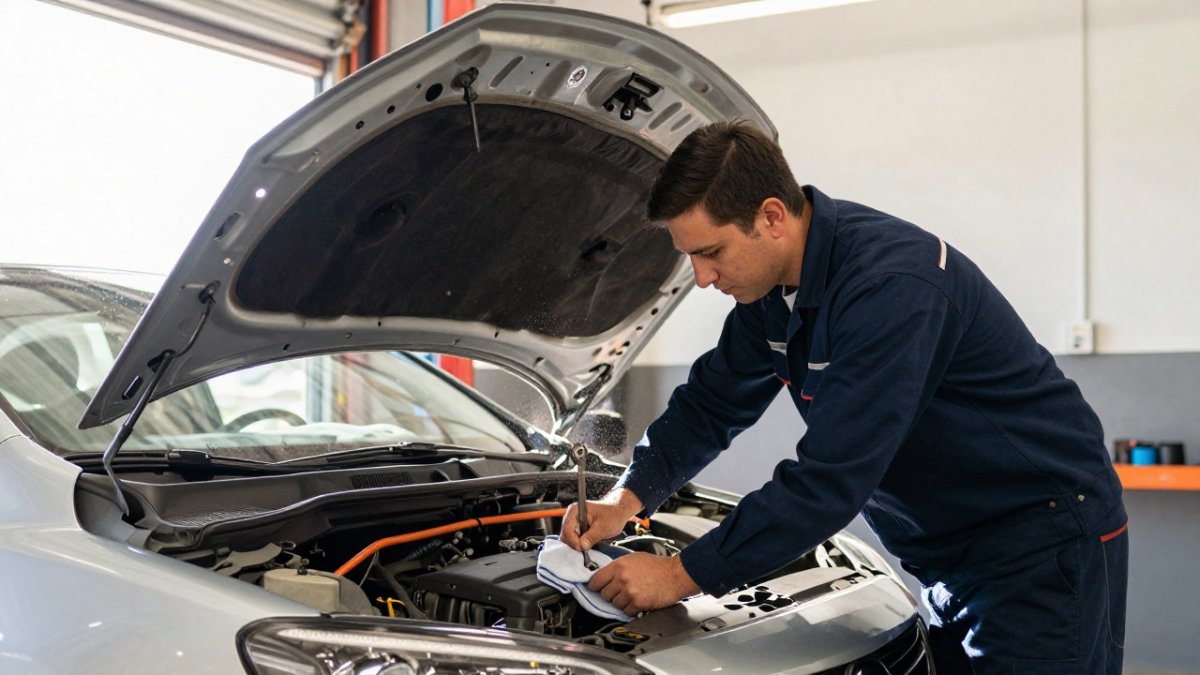
Visual inspection. Tires, wheels, brake rotors, suspension components, CV axle boots, and mounts are checked for obvious wear or damage. This step catches loose lug nuts, torn boots, cracked mounts, and uneven pad wear that a scan tool cannot see.
Tire and wheel check. Balance, runout, and tire pressure are measured, and wheels are inspected for bends. A wheel balancer shows how far out of balance a tire is and where weight needs to go; a dial indicator checks wheel and rotor runout. If a tire is out of balance, the correction is usually straightforward, but the technician still checks runout because a bent wheel can mimic an imbalance.
Fault codes and live data. An OBD scan pulls fault codes and shows whether the engine is misfiring or running rough. Live data can reveal a misfire counter climbing at idle or under load, which points to ignition or fuel delivery rather than a rotating part.
Targeted testing. Depending on findings, the technician may use a vibration analyzer, check driveline angles, or isolate a corner of the car on a lift. A vibration analyzer measures frequency and can pinpoint which rotating component matches the shake. Driveline angle checks are useful when the vibration appears under load and feels like it comes from the floor or seat.
Tools Used and What Their Results Mean
A road test confirms the symptom and its speed range. A wheel balancer shows how far out of balance a tire is and where weight needs to go. An OBD scanner reveals misfire codes and live engine data.
The results matter because frequency identifies the source. A vibration that matches wheel rotation speed points to tires or wheels. One that matches engine speed points to the engine or driveline.
How to Tell Wheel, Brake, Engine, and Driveline Vibration Apart
This is a decision guide, not a diagnosis. Use it to organize what you tell the shop, not to skip the inspection.
Wheel or tire vibration: felt in the steering wheel or seat, builds with vehicle speed, often appears in a narrow speed band such as 45 to 55 mph, and may fade above 65 mph. A bent wheel or lost wheel weight is a common cause.
Brake vibration: felt through the brake pedal and sometimes the steering wheel, appears only when braking, and often worsens with speed. Warped or unevenly worn rotors are a common cause.
Engine vibration: felt at idle or under acceleration, often through the seat and steering wheel when the car is stopped, and may come with a check engine light or rough running. Misfires, worn spark plugs, and failing engine mounts are common causes.
Watch out: a shop that quotes a repair before driving the car is guessing, and you will pay for the guess. Ask the technician to explain which test pointed to the recommended part.
What to Record Before You Book an Appointment
A written symptom log makes the diagnostic visit more efficient and gives the technician evidence instead of a vague complaint. Write down the following before you call, and bring the notes with you or read them over the phone.
Speed range: the exact miles per hour where the shake starts, peaks, and fades. Note whether it appears at 15 to 25 mph, 45 to 55 mph, or above 65 mph.
Location of the shake: steering wheel, seat, floor, brake pedal, or a combination. This helps separate front-end, rear, driveline, and brake sources.
Driving condition: acceleration, deceleration, braking, coasting, turning, or steady cruise. Note whether the shake changes when you let off the gas or press the brake.
A short phone video of the shaking steering wheel or a photo of the tire tread helps too. A common mistake is telling a shop only "it shakes on the highway," which forces the technician to spend billable time reproducing what you already know.
When to Stop Driving and Call for Help
Some vibrations are urgent. Stop driving and arrange a tow or a mobile inspection if you feel severe shaking that affects steering control, if a wheel or lug nut area looks loose, if you see smoke or smell burning, or if the vibration comes with a loss of braking or steering response. A loose wheel can separate, and a failing brake component can affect stopping distance.
Questions to Ask About the Diagnostic Fee and Quote
Before you book, ask what the diagnostic fee includes, whether it is credited toward the repair if you approve the work, and whether you will receive the findings in writing before any parts are recommended. Ask whether the shop road tests the car before quoting and whether the technician uses a vibration analyzer or relies on experience alone. A shop that answers these questions clearly is more likely to show you the evidence behind its diagnosis.
Car Vibration Diagnosis Cost and How to Read a Repair Estimate
Most shops charge a diagnostic fee to cover the road test, inspection, and scan, and that fee is often applied toward the repair if you approve the work. Ask upfront what the fee covers and whether it is credited. Our automotive repair estimate guide explains how labor, parts, and diagnostic charges should be itemized.
Estimate Line | What It Should Tell You | Red Flag If... |
Diagnostic fee | What tests are included and if it credits to repair | It is vague or changes after the fact |
Parts | Part number, brand, and whether new or remanufactured | No part numbers listed |
Labor | Hourly rate and estimated hours per job | Hours appear without explanation |
Warranty | Coverage terms on parts and labor | No warranty stated at all |
Approvals | Written approval required before extra work | Shop adds work without calling you |
Ask for the old parts back. A shop confident in its diagnosis will not hesitate.
How to Choose a Mechanic for Car Vibration Diagnosis
Look for a shop that road tests before quoting, explains its diagnostic process, and puts the estimate in writing.
Questions worth asking:
What does the diagnostic fee include, and is it credited toward the repair?
Will you show me the worn component or the scan results?
If the first repair does not fix it, what happens next?
That last one matters more than most drivers expect. Warranty back-and-forth eats days, and a shop that manages those calls for you removes the biggest headache. These seven steps for choosing a trustworthy shop apply to any repair, vibration or otherwise.
Watch out: a shop that quotes a repair before driving the car is guessing, and you will pay for the guess.
Book Your Vibration Inspection at Cruiser Auto Repair
A shake that goes undiagnosed gets worse, and it can wear tires, brakes, and driveline parts along the way. Our professionally qualified technicians diagnose before recommending repairs, and we aim to show you the findings so you can see the evidence.
If your car has been shaking and you are tired of guessing, bring it in. Cruiser Auto Repair offers professionally qualified technicians, competitive and transparent pricing, and direct handling of extended warranty claims, so you get a clear diagnosis and a repair plan without the runaround.
Frequently Asked Questions
How much does a car vibration diagnosis cost?
Most shops charge a diagnostic fee that covers the road test, visual inspection, and tool checks, and many apply part or all of it to the repair if you approve the work. Ask about that credit policy before you book. A full car diagnostic test that also pulls fault codes usually costs more than a focused vibration inspection. Get the fee in writing, along with what the inspection includes, so there are no surprises when you pick up the car.
Is it safe to drive a car that is vibrating?
A light vibration is usually safe for a short trip to a shop, but stop driving and get help if the shaking comes with a pulling steering wheel, a burning smell, a flashing check engine light, or vibration that gets worse fast. Those point to brake, tire, or driveline problems that can fail suddenly. When in doubt, have the vehicle towed or call for breakdown service rather than risk a failure at highway speed.
Can a mechanic diagnose vibration during a test drive?
Yes, and a road test is often the most useful step. A technician drives at the speeds and under the conditions where you feel the shaking, then notes whether it shows up during acceleration, deceleration, braking, or a steady cruise. That symptom pattern narrows the list of suspects before the car ever goes on a lift. Tell the shop the exact speed range and driving situation so the test drive reproduces the problem.
Why does my car vibrate at certain speeds?
Vibration tied to a specific speed range usually points to rotating components: an out-of-balance tire, a bent wheel, a worn wheel bearing, or a CV axle. If the shaking appears at 50 to 70 mph and fades when you slow down, tire balance and wheel condition are the first things to check. Vibration that changes with engine speed rather than vehicle speed points toward the engine or mounts instead.

Comments