
7 Steps to Choosing the Right Oil Viscosity for Your Car
Last Updated: October 29, 2026
Quick Summary
The right oil viscosity for your car is the grade the manufacturer specifies for your exact engine in the owner's manual, not a friend's recommendation or a sale label. Oil viscosity measures how thick the oil is and how easily it flows, and the numbers on the bottle describe that thickness at cold-start and operating temperatures.
The number before the W rates low-temperature flow, and the number after it rates thickness at operating temperature.
If the oil-fill cap and the owner's manual disagree, trust the manual because caps get swapped.
Use your 17-character VIN in a vehicle lookup tool when the manual is missing from the glovebox.
A bottle can say 5W-30 and still be the wrong oil if it lacks the required API or ILSAC specification.
Ambient temperature can narrow the approved grades but never expands them beyond the manual's list.
Table of Contents
What Oil Does My Car Need? Start With the Owner's Manual
The right oil viscosity for your car is the grade the manufacturer specifies for your exact engine, not the grade a friend recommends or the one on sale. Oil viscosity decides how well your engine is protected on a cold start and at full temperature, so checking that spec before any service is the sensible starting point. For the broader case for staying on schedule, see the benefits of regular oil changes.
Reading the Oil-Fill Cap and Owner's Manual
Two places in your own car tell you the answer. The oil-fill cap often prints the recommended grade right on top, something like 0W-20 or 5W-30. The owner's manual goes further: it lists the grade, the required API service category, and any approved alternates for extreme temperatures.
Check both, and check them in that order:
Oil-fill cap: fast confirmation of the primary grade
Owner's manual, fluids section: full spec, including API and ILSAC standards
Manual's maintenance schedule: oil change interval tied to your driving conditions
If the cap and the manual disagree, trust the manual. Caps get swapped, and manuals are written for your specific engine.

Using a Vehicle Lookup Tool When the Manual Is Missing
No manual in the glovebox? Use your VIN. Every automaker and most oil brands offer a vehicle lookup tool that matches your make, model, engine, and model year to the factory fill.
One warning: lookup tools sometimes list a range of acceptable grades. The first grade listed is the factory recommendation. Treat the rest as fallbacks for unusual conditions, not as free choices.
What Do Oil Viscosity Numbers Mean?
Oil viscosity is a measure of how thick the oil is and how easily it flows. The numbers on the bottle describe that thickness at two different temperatures.
Here is how to read it:
The number before the W (5W, 0W, 10W) rates low-temperature flow. Lower means the oil stays thin in cold weather and reaches the engine faster on a cold start.
The number after the W (20, 30, 40) rates oil thickness at operating temperature. Higher means a thicker film that resists heat better.
The W itself stands for winter, not weight.
A 0W-20 flows easily when cold and stays thin when hot. A 15W-40 is thicker at both ends. Neither is "better" on its own; the engine is built for one of them.
Cold-Start and Operating-Temperature Viscosity
Cold-start viscosity matters more than most drivers realize.
Operating-temperature viscosity matters once the engine is warm. Too thin, and the oil film can't hold up under load. Too thick, and it can't circulate fast enough to carry heat away.
The SAE J300 standard defines these grades, and the SAE International grade classifications set the test thresholds every oil must meet.
0W-20 vs 5W-30: Which Grade Fits Your Engine
The 0W-20 vs 5W-30 question has one honest answer: whichever grade your manufacturer specifies. Both are common factory fills, and they are not interchangeable on a whim.
AMSOIL INC.
Grade | Cold Flow | Hot Thickness | Typical Use |
0W-20 | Flows fastest in cold | Thinner film when hot | Modern engines built for low-viscosity oil |
5W-20 | Good cold flow | Thin film when hot | Older engines specifying 20-weight |
5W-30 | Good cold flow | Moderate film when hot | Widespread factory fill, common alternate |
10W-30 | Slower cold flow | Moderate film when hot | Warmer climates, older engines |
15W-40 | Slowest cold flow | Thickest film when hot | Heavy-duty and older applications |
Moving from 0W-20 to 5W-30 because "thicker is safer" is a common mistake. Engines designed for 0W-20 have tight bearing clearances and variable valve timing systems that depend on fast oil flow. Thicker oil can slow that flow and, in some engines, affect how the variable valve timing responds.
Engine Oil Viscosity Chart: Matching Grade to Temperature
An engine oil viscosity chart maps grades to ambient temperature ranges, and it is a useful sanity check, not a substitute for the manual. The chart below shows the general cold-start and hot-weather envelope for common grades, but the only approved range is the one printed in your owner's manual for your exact engine.
Grade | Practical Cold-Start Range | Practical Hot-Weather Range | Typical Application |
0W-20 | Well below freezing | Hot climates | Modern low-viscosity engines |
5W-20 | Cold winters | Hot summers | Older 20-weight engines |
5W-30 | Cold winters | Hot summers | Widespread factory fill |
10W-30 | Mild cold | Hot climates | Warmer regions, older engines |
15W-40 | Above freezing | Hot climates | Heavy-duty and older applications |
Use the chart as a decision aid inside the manufacturer-approved list, not as a license to step outside it. Here is the sequence that keeps you safe:
Confirm the approved grades. The owner's manual may list one grade or a short list of alternates for extreme temperatures.
Match the season to the approved list. If the manual approves both 0W-20 and 5W-30, a 5W-30 is a reasonable summer choice in a hot climate, and 0W-20 is the better winter pick. If the manual approves only one grade, use it year-round.
Check the oil specification. The API's engine oil guide explains the service categories that go with each grade, and those categories are not optional.
Never step outside the approved list to chase a temperature. A grade that flows better in cold but is not approved for your engine can still be the wrong oil.
Watch Out Ambient temperature can narrow the approved choices, but it never expands them. If your manual lists a single grade, that grade is the answer in January and in July.
Seasonal guidance is simple: stay inside the manufacturer-approved grades and let temperature pick among them. If you are unsure whether a grade is approved, verify with the VIN lookup tool or the manual before buying. The chart is a cross-check, not a replacement for the specification.
Viscosity vs Oil Specification: Why Both Matter
Viscosity tells you how thick the oil is. The oil specification tells you whether the oil is built to protect your engine.
The specification lives in codes like API SP, ILSAC GF-6A, or an ACEA sequence. These standards cover wear protection, deposit control, and compatibility with seals and emissions systems.
Check for three things on the bottle:
The viscosity grade matching your manual
The API service category your manual requires
The ILSAC or ACEA standard if your automaker lists one
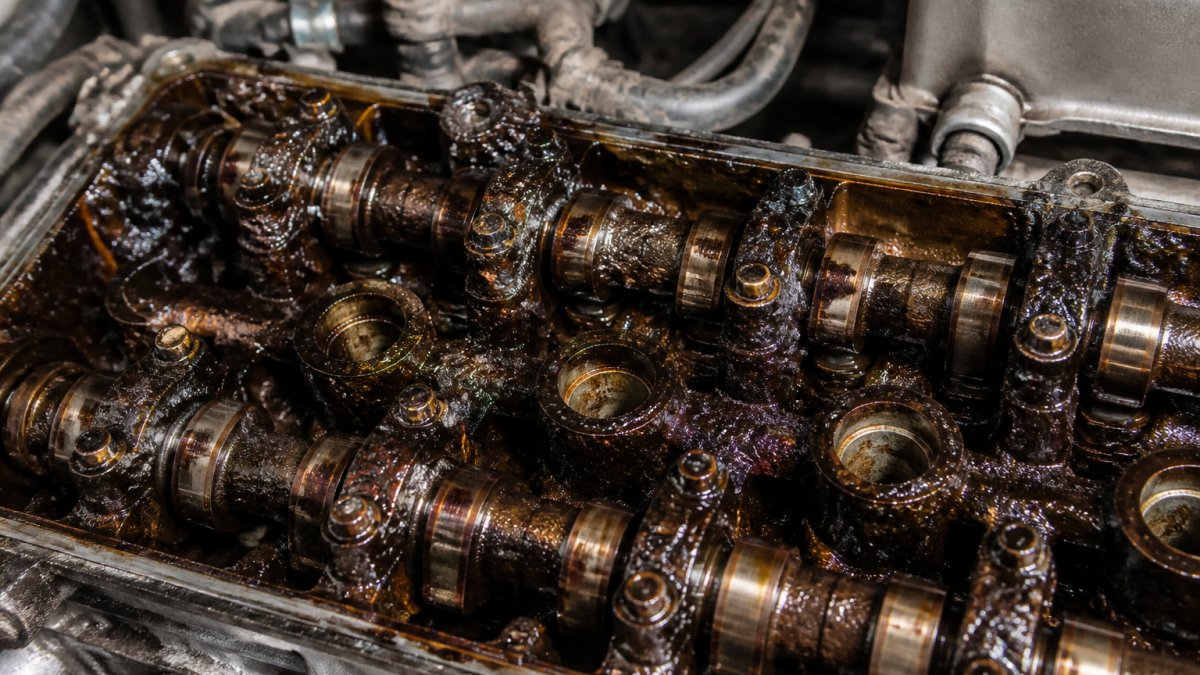
Matching both the grade and the spec is the approach that protects the engine. Skipping the spec is how engines end up with signs of engine sludge buildup long before their time.
Common Misconceptions About Thicker Oil and High-Mileage Engines
Thicker oil is not automatically better, and the high-mileage myth causes real damage. The claim goes like this: older engines have worn clearances, so step up a grade. Sometimes a manual approves that step. Often it does not.
What most guides miss is that oil consumption and noise in an older engine usually trace to worn seals, a failing PCV system, or actual mechanical wear, not to oil that is "too thin." Pouring in 10W-40 to quiet a lifter tick masks a symptom and can starve tight passages of flow.
Three myths worth retiring:
"Thicker oil protects better." Only if the engine was built for it.
"High mileage means go up a grade." High-mileage oils exist, but the grade still comes from the manual.
"Synthetic is too thin for old engines." Synthetic oil meets the same grades; it does not change viscosity.
For more of these, our breakdown of common car repair myths covers the maintenance advice that costs drivers money.
When Recommendations Conflict: How to Decide
Conflicting advice is normal, and the reliable way to resolve it is a hierarchy, not a vote. Here is the decision tree we use, with the reasoning behind each step:
Owner's manual vs. oil-fill cap: follow the manual. Caps get swapped, and manuals are written for your specific engine and model year.
Manual vs. dealer or quick-lube recommendation: follow the manual unless the shop can point to a documented technical service bulletin or a manufacturer-approved alternate. A verbal recommendation is not a specification.
Manual vs. forum advice: follow the manual. Every time. Forums generalize across engines; the manual is specific to yours.
Two grades approved in the manual: pick by climate and driving conditions, staying inside the list. Do not add a grade the manual does not list.
Extended warranty or automaker requirement: follow it exactly, and keep receipts. If your engine is covered, an unapproved grade gives a provider a reason to question a claim.
The hierarchy matters because the sources are not equal. The owner's manual is the manufacturer's specification for your engine. The oil-fill cap is a convenience label that can be wrong after a cap swap.
Pro Tip Before you buy, write down the approved grade and the required API or ILSAC specification from the manual. If a bottle does not match both, it is not the right oil, no matter what the label says.
That last point matters. If your engine is covered, an unapproved grade gives a provider a reason to question a claim.
Using the wrong grade has consequences: slower cold-start flow, higher oil consumption, reduced fuel economy, and in the worst cases, timing chain and bearing wear. None of that shows up on day one, which is why the spec matters more than the label.
Schedule Your Oil Change at Cruiser Auto Repair
Our technicians handle everything from routine oil changes to complex repairs, and we work directly with extended warranty providers so claims do not become your problem. If you want to see the broader case for staying on schedule, read up on the benefits of regular vehicle maintenance schedules. You can also follow our guide to scheduling car maintenance in Glen Burnie if you are new to the area.
Frequently Asked Questions
How do I know what oil viscosity my car needs?
Check the owner's manual or the oil-fill cap first. Both list the manufacturer-recommended SAE grade, such as 0W-20 or 5W-30, along with the required API or ILSAC specification. If the manual is missing, use a vehicle lookup tool keyed to your make, model, year, and engine. Never guess based on what a previous owner used or what is on sale, because the wrong grade can affect cold starts, fuel economy, and engine protection.
Is thicker oil better for my car?
Not automatically. Thicker oil can reduce flow at cold start and may not reach tight clearances as quickly, which matters most in the first seconds after ignition. Modern engines are built around specific oil viscosity grades, and moving up a grade without a reason can hurt fuel economy and variable valve timing performance. Only change grades if the manufacturer approves an alternative for your climate or driving conditions.
Can I use a different oil viscosity than the one recommended?
Only when the manufacturer lists an approved alternative for your temperature range. Many manuals show a primary grade plus optional grades for extreme cold or heat. Using an unapproved grade can void warranty coverage on oil-related failures and may cause oil consumption or noise. If you are unsure, ask a shop to confirm the approved grades for your engine before the oil change.
Does cold weather affect which oil viscosity I should use?
Yes. The number before the W in a grade like 0W-20 or 5W-30 describes cold-temperature flow, and a lower number flows more easily in cold starts. If you live where winters drop well below freezing, the manufacturer's cold-weather grade matters more. Stay within the approved list in your manual rather than picking a grade by feel, and confirm the specification on the bottle matches what the engine requires.
Getting the grade wrong is a slow, quiet problem, and it is the kind of thing that surfaces at the worst moment. Let us take the guesswork out of it. Cruiser Auto Repair offers professionally qualified technicians, competitive and transparent pricing, and seamless handling of warranty company communications, all backed by prompt breakdown support when you need it most. Get started with Cruiser Auto Repair and schedule your appointment with confidence.

Comments