
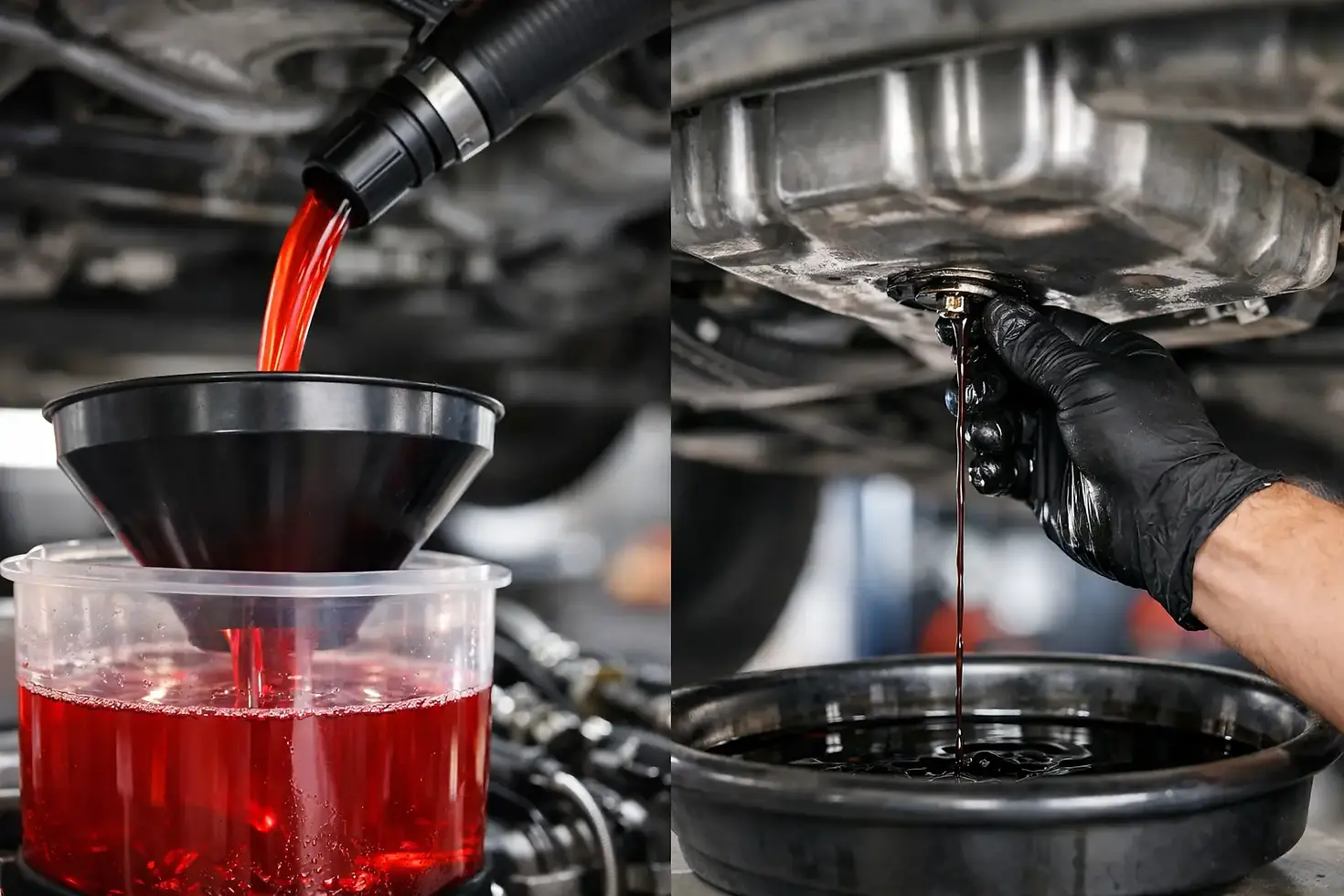
Transmission Flush Versus Fluid Change Explained
- Jesse Clay
- 2 days ago
- 5 min read
A delayed shift when you are merging onto Route 100, a shudder at a stoplight, or a dark spot of fluid in the driveway can make any driver worry about the transmission. When it is time for service, the choice often comes down to transmission flush versus fluid change. They are not interchangeable services, and choosing the right one depends on your vehicle, its maintenance history, and the condition of the fluid already inside it.
The goal is not to sell the biggest service. It is to protect a major vehicle component with the procedure your transmission actually needs.
Transmission Flush Versus Fluid Change: The Difference
Transmission fluid does much more than lubricate moving parts. In most automatic transmissions, it also helps transfer power, control hydraulic pressure, cool internal components, and keep shift quality consistent. Heat, stop-and-go driving, towing, and normal wear gradually reduce that fluid's ability to do its job.
A transmission fluid change, often called a drain-and-fill service, removes some of the old fluid and replaces it with new manufacturer-specified fluid. Depending on the transmission design, the technician may remove the pan, inspect it for debris, replace the filter or gasket when applicable, and refill the system to the correct level.
A transmission flush uses specialized equipment to exchange a much larger portion of the old fluid as new fluid moves through the transmission and cooler lines. The transmission's own pump is generally used as part of the exchange process. A flush can address fluid that remains in areas a standard drain cannot reach, including the torque converter and cooler circuit.
Neither approach is automatically better. A fluid change is often the sensible maintenance choice for a vehicle that has been serviced on schedule. A flush may be appropriate when the manufacturer recommends it or when a technician confirms it is suitable for the transmission's condition.
When a Fluid Change Is the Better Choice
A drain-and-fill is a conservative, effective service for many daily drivers. It is commonly recommended when fluid is due by mileage or age but the transmission is shifting normally and does not show signs of internal damage.
It also allows a technician to inspect what comes out. A small amount of fine material may be normal, especially on a vehicle with higher mileage. Heavy metallic debris, clutch material, or a burned odor is different. Those findings can point to wear that fresh fluid alone will not correct.
Some modern transmissions are designed around a particular fluid-change procedure rather than a full machine exchange. That includes many continuously variable transmissions, or CVTs, and certain dual-clutch and electronically controlled units. Using the exact fluid specification and proper fill process matters more than using a one-size-fits-all service.
A fluid change may also be the cautious option for a vehicle with an unknown maintenance history. If an older transmission has gone far beyond its service interval, a qualified inspection should come before any recommendation. That does not mean old fluid should never be changed. It means the vehicle deserves an honest assessment rather than an automatic answer.
When a Transmission Flush May Make Sense
A flush can be useful when a vehicle has been maintained regularly, the manufacturer permits the procedure, and the fluid needs a more complete exchange. It can replace more of the degraded fluid and may be recommended for drivers who put their vehicles through severe use, such as frequent towing, delivery driving, heavy commuting, or repeated short trips.
The word “flush” sometimes causes confusion because people picture harsh chemicals being forced through a transmission. A professional fluid exchange should follow the vehicle manufacturer's requirements and use compatible fluid. Chemical cleaners are not a universal transmission service and should not be treated as a shortcut for diagnosing a problem.
A flush is not a repair for slipping, grinding, harsh engagement, or a transmission that will not stay in gear. Those symptoms require diagnostics first. If a transmission has worn clutches, damaged solenoids, low line pressure, or an internal mechanical problem, new fluid cannot restore the failed part.
Why Maintenance History Changes the Answer
Transmission service recommendations should begin with the owner's manual, not a generic mileage sticker. Some manufacturers list a normal and severe-service schedule. Others use terms such as “inspect” or “lifetime fluid,” which can be misleading for drivers who plan to keep a vehicle for many years.
“Lifetime” often means the anticipated service life under specific operating conditions, not that fluid stays perfect forever. Maryland summers, traffic, winter cold starts, steep grades, towing, and long commutes can all add stress. A technician can check the fluid condition, scan for transmission-related trouble codes, look for leaks, and review the service history before recommending a path forward.
If you recently bought a used car and do not know whether the transmission was serviced, do not assume a flush is necessary. Ask for an inspection and a clear explanation of what the fluid, pan, and diagnostic results show. That approach gives you useful information without gambling on an unnecessary service.
Signs You Should Schedule an Inspection
Transmission fluid service is preventive maintenance, but certain issues should be checked sooner. Pay attention if you notice a delay moving from Park into Drive, rough or inconsistent shifts, slipping under acceleration, a whining sound, a burning smell, or a red, brown, or dark fluid leak beneath the vehicle.
Not every shifting concern is caused by the transmission itself. Low fluid, an engine performance issue, a failing sensor, damaged wiring, or a software-related concern can create similar symptoms. A proper diagnosis keeps you from paying for fluid service when the real issue is somewhere else.
Do not wait for a warning light if the vehicle is driving noticeably differently. Continuing to drive with low or overheated fluid can turn a manageable repair into a much larger one.
What a Professional Transmission Service Should Include
Good transmission service is more than removing a drain plug and adding fluid. The correct process starts by identifying the transmission type and factory fluid specification. Universal fluid is not appropriate for every vehicle, and the wrong fluid can affect shift quality and internal operation.
The technician should also verify the fluid level using the procedure required for that vehicle. Many newer transmissions do not have a traditional dipstick. Fluid level may need to be checked at a specific temperature with the engine running, which is one reason this job is not always ideal for a quick do-it-yourself attempt.
If the pan is removable, inspection matters. The pan, magnets, gasket, filter, and visible debris can provide valuable clues about the transmission's health. The service should also include a leak check and a road test or operational verification when appropriate.
At Cruiser Auto Repair, the recommendation should be based on the vehicle in front of us, not a blanket sales pitch. For Glen Burnie drivers balancing commutes, family schedules, and work demands, that means straightforward answers about what service is needed now, what can be monitored, and what the likely cost will be before work begins.
Can Changing Old Fluid Damage a Transmission?
This question comes up often, especially with high-mileage vehicles. Fresh fluid does not create an internal failure. But a transmission that is already badly worn may have been masking its condition with old, contaminated fluid. Once service is performed, the existing problem can become more noticeable.
That is why an experienced shop should not promise that a flush or fluid change will cure slipping or severe shift problems. The right move may be a diagnostic evaluation first, followed by a realistic discussion of maintenance, repair, or replacement options.
Records matter, too. Keeping proof of recommended maintenance can support resale value and may be helpful when working through an extended-warranty claim. More importantly, it gives you and your technician a clearer picture of what the vehicle needs next.
If you are unsure whether your vehicle needs a transmission flush or a fluid change, start with an inspection and your maintenance history. A few careful checks now can help you make a confident decision and keep a small concern from interrupting your next trip.


Comments